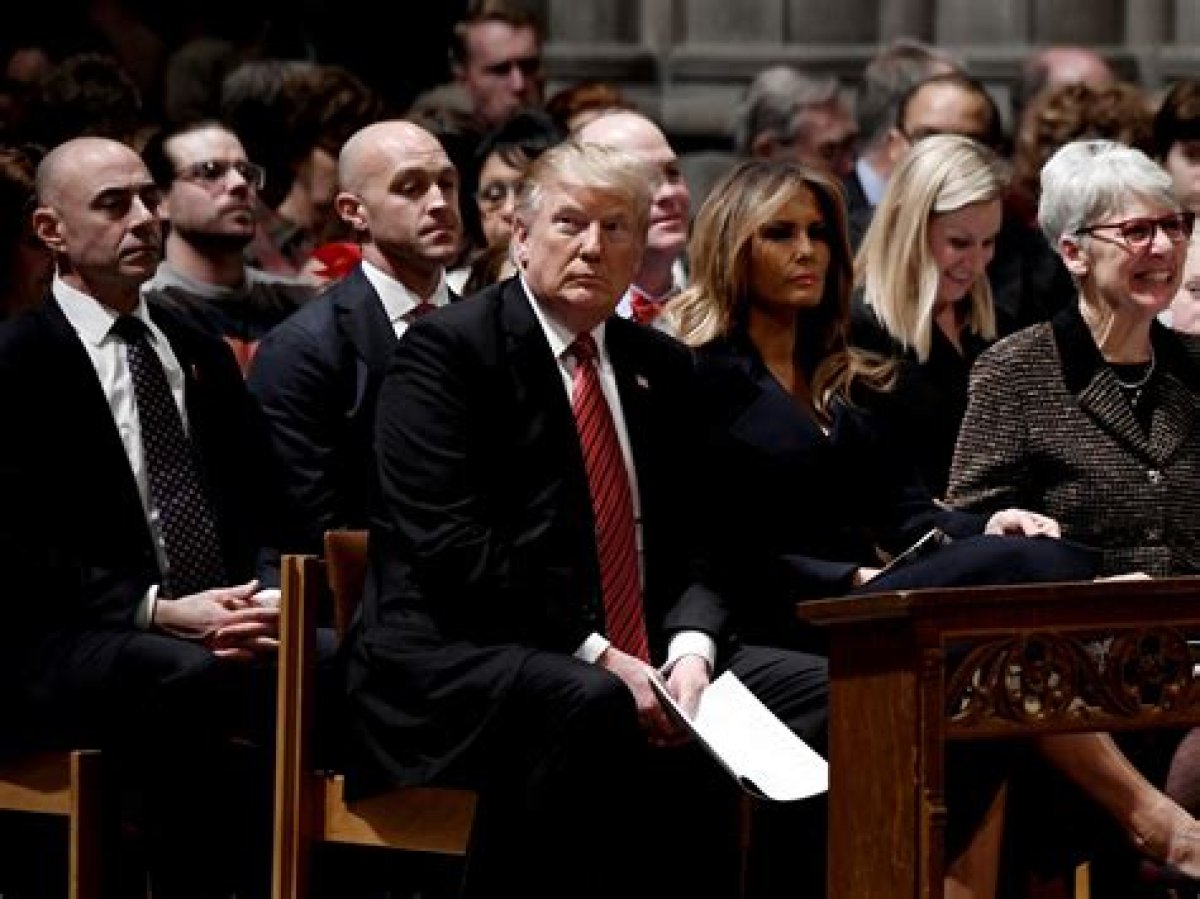
When it comes to understanding the personal life of former President Donald Trump, one question often arises: does Trump regularly attend church? This inquiry not only reflects curiosity about his spiritual beliefs but also the broader implications of how faith influences political figures in America. In this article, we will explore Trump's relationship with religion, his church attendance habits, and the impact of these factors on his political career.
Throughout his presidency and beyond, Trump has made headlines for his comments on various religious matters. While many politicians wear their faith on their sleeves, Trump's approach has been somewhat more complex. The conversation surrounding his church attendance is intertwined with discussions about his public persona, the evangelical community's support, and the perception of authenticity in leadership. This article aims to dissect these elements and provide a comprehensive overview of Trump's church attendance, or lack thereof.
As we delve deeper, we'll analyze reports, personal accounts, and expert opinions to paint a clearer picture of Trump's religious practices. With a focus on the concept of E-E-A-T (Expertise, Authoritativeness, Trustworthiness) and YMYL (Your Money or Your Life), this article will provide valuable insights into how Trump's church attendance—or absence—shapes his public image and influences his political strategies.
Trump's Religious Background
Donald Trump was born on June 14, 1946, in Queens, New York, into a family with a strong Presbyterian background. His father, Fred Trump, was of German descent and his mother, Mary Anne MacLeod Trump, was a Scottish immigrant. Although Trump was raised in a religious environment, he has often been criticized for his inconsistent religious practices.
In his younger years, Trump attended church services with his family, particularly during Christmas and Easter. However, as he grew older, his regular attendance at church diminished. Reports indicate that he has often expressed a more personal interpretation of faith, emphasizing the importance of being a "good person" over traditional religious observances.
Personal Beliefs and Public Statements
Trump's personal beliefs have often been called into question. In interviews, he has claimed to be a Christian and has even stated that he identifies as a Presbyterian. Yet, his actions and public statements sometimes suggest a more ambiguous relationship with organized religion.
Trump's Church Attendance Habits
Many Americans wonder about Trump's actual church attendance. Reports indicate that during his presidency, Trump attended church services sporadically. Significant instances include his attendance at St. John's Episcopal Church in Washington, D.C., during the summer of 2020, when he posed for photos holding a Bible.
However, aside from these high-profile appearances, Trump's regularity in attending church services has been questioned. Unlike many politicians, who often use their faith to connect with voters, Trump has been less visible in traditional church settings. This discrepancy raises questions about how much religion plays a role in his life.
Notable Church Appearances
- St. John's Episcopal Church: July 2020
- First Presbyterian Church: Attended as a child
- Various events during presidential campaigns

