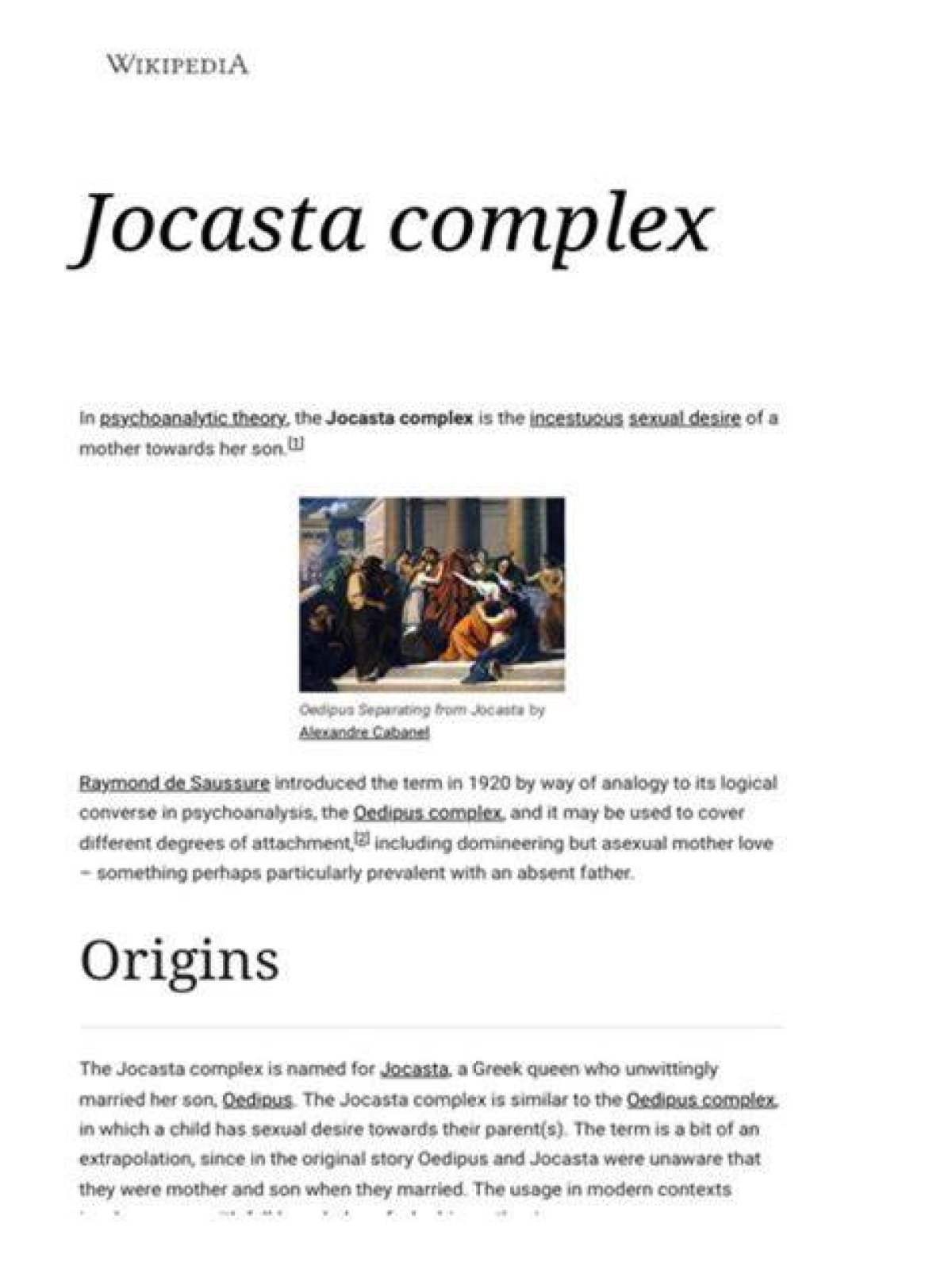
The Jocasta Complex is a fascinating psychological concept that delves into the intricacies of mother-son relationships. Originating from the tragic tale of Jocasta in Greek mythology, this complex describes an unconscious desire of a mother for her son, intertwining themes of love, possession, and emotional dependency. By examining this complex, we can gain insights into the dynamics of familial relationships and their implications on personal development.
As we explore the Jocasta Complex, we will uncover its roots in classical literature and psychology, revealing its significance in modern therapeutic practices. Understanding this complex can shed light on various behavioral patterns observed in individuals and the psychological conflicts they face. This complex is not only relevant in the context of mythology but also finds its place in contemporary psychological discourse, making it a critical area of study.
Throughout this article, we will address the various facets of the Jocasta Complex, including its definition, implications, and how it manifests in real-life situations. By analyzing its effects on personal relationships and psychological well-being, we aim to provide a comprehensive overview of this complex phenomenon. Join us as we delve deeper into the Jocasta Complex and its profound impact on human behavior.
What is the Jocasta Complex?
The Jocasta Complex is a term used in psychology to describe a mother's overwhelming emotional attachment to her son, often leading to possessive and controlling behaviors. This complex draws its name from the character Jocasta in ancient Greek mythology, who unknowingly married her son, Oedipus. The complex addresses the consequences of this intense emotional bond, which can hinder a son’s development and independence.
How Does the Jocasta Complex Manifest in Relationships?
In relationships where the Jocasta Complex is present, several behavioral patterns may emerge:
- Overprotectiveness: The mother may exhibit excessive concern for her son's well-being, often making decisions on his behalf.
- Emotional Manipulation: The mother may use guilt or emotional pressure to maintain control over the son.
- Dependency: The son may struggle to establish his identity separate from his mother, leading to co-dependent behaviors.
- Lack of Boundaries: There may be blurred lines between maternal love and possessiveness, affecting the son's ability to form healthy relationships with others.
What Are the Psychological Implications of the Jocasta Complex?
The psychological implications of the Jocasta Complex can be significant and long-lasting. Some potential effects include:
- Low Self-Esteem: The son may develop feelings of inadequacy, believing he cannot live up to his mother's expectations.
- Difficulty in Romantic Relationships: The son may struggle to form intimate relationships with partners due to deep-rooted emotional ties to his mother.
- Fear of Abandonment: The son may experience anxiety about losing his mother's affection, leading to clingy or avoidant behaviors.
- Identity Confusion: The son may have difficulty establishing his identity separate from his mother's influence.

